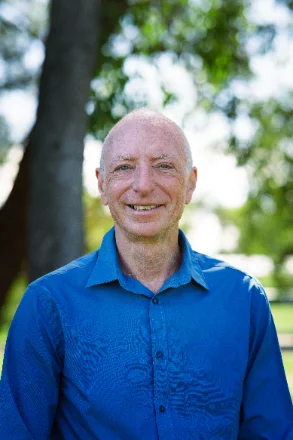
I have arrived at this point in my life not as some revelation of a new place, but as a returning — to somewhere I have been travelling toward for a long time.
Many years ago, as a business and life coach, I saw firsthand the effectiveness of coaching when it was done well. I also saw what it often missed. The focus on goals, accountability, and measurable outcomes is not wrong in itself — but it can leave the human being underneath largely untouched. And it is the human being underneath who most needs attending to.
We do not need more knowledge. The internet has given us more knowledge than any of us can absorb. What we need — what our culture is quietly starving for — is wisdom. And wisdom cannot be downloaded. It grows slowly, through lived experience, through failure and recovery, through time spent honestly with oneself and in genuine company with others.
When I was building this practice, someone suggested I add a scorecard to the website — a way for people to measure and rate themselves before reaching out. I understood the logic. But something in me resisted strongly. Because the scorecard, however well-intentioned, is still a metric. And I had spent enough time with people to know that behind every metric, every KPI, every neatly organised self-assessment, there is usually a human being who is quietly, deeply unsatisfied — and who needs something no score can provide.
Around the same time, I encountered Iain McGilchrist’s work — his exploration of how the two hemispheres of the brain attend to the world in fundamentally different ways, and what it costs us when the measuring, managing, categorising mind drowns out the quieter, wider way of knowing. I remember putting the book down and thinking: that’s it. I knew this all along.
Much of what passes for progress in our time is left-hemisphere thinking applied to human beings — scoring, optimising, tracking, fixing. The Coherence Practice is a different invitation entirely. It is a space where the quieter knowing is welcomed back. Where wisdom is trusted over metrics. Where the person in the room is met as they are, not assessed against where they should be.
I bring to this work a lifetime of questions, a deep respect for the complexity of human beings, and a genuine belief that the wisdom each person needs is already within them. My role is not to provide it. It is to help you hear it.
That has always been the work. I am simply, finally, saying so clearly.
— Tim Greig, Perth, Western Australia